Environmental graphic design (EGD) incorporates graphics, typography, objects, and displays into built environments to create engaging and inspiring interior and exterior spaces. At CollinsWoerman, we look at EGD as an important aspect of design that helps elevate placemaking, reinforces brand identity, and strengthens the connection between people and their environment. Our understanding and design expertise help our team approach each project and client with a personal perspective.
Over the past 10 years, we have seen the incorporation of EGD become more prevalent. Designers and clients have recognized how it helps elevate a client’s brand and space in an artistic, purposeful way. Environmental graphics customize spaces in a world where design can often become repetitive.
We typically begin discussing EGD opportunities with our clients early in the design phase. Once a successful design concept has been established, our interior designers and environmental graphic designers identify potential locations within the project that could be enhanced with imagery, lighting, or other EGD elements. We then present multiple design options, all aligned with our client’s branding, messaging, and the overall design concept of the project.
CollinsWoerman works with our clients to incorporate EGD in a variety of creative ways. The following outlines the core services with typically include in our scope of work across a wide range of project types:
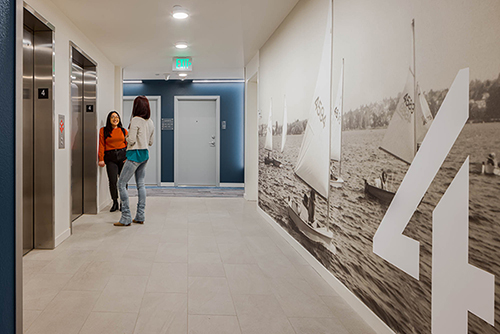
Wayfinding and Signage: Wayfinding helps people understand where they are within an environment and how to get to their destination. These often include room numbers or names, shapes along a wall to guide you to the next space, and more.
Wall Coverings: Wall coverings can enhance space by adding personality and visual interest. They are often tailored to a company’s branding or a chosen theme.
Informative / Exhibit Graphics: Informative graphics or exhibits educate visitors while adding character and personality to a space and have proven successful in spaces that want to highlight sustainability features, local history, etc.
Digital EGD: Using digital screens, kiosks, and projections allows visual elements to be dynamic, kinetic, and illuminated. From a small digital room sign to show availability to large lobby screens to show desk locations, digital EGD is becoming more common.
Floor Graphics: A creative way to incorporate EGD, messages and graphics can be die-cut into various shapes and used for wayfinding, branding, inspiration, or to uniquely create greater visual impact within a space.
Glass & Window Films: Perhaps you have seen this in areas such as conference rooms or classrooms, glass and window films can enhance privacy while adding branding, information, and character to a space.
Dimensional Graphics: Three-dimensional graphics, exhibits, and objects can create a more dynamic and immersive experience.
CollinsWoerman’s approach to EGD development follows a collaborative process and is built to help us work directly with our client to create alignment with your space and your company culture. Our process includes three parts: Discovery & Analysis, Concept Design, and Design Development:
-
Discovery & Analysis – We start with Discovery & Analysis to help us understand our client’s vision, culture, history, and goals. We begin with a detailed review of the organization’s standards including typography, color palettes, nomenclature, iconography, fabrication methods, etc.
-
Concept Design – We then move to Concept Design, where we work to translate the client’s brand into spatial storytelling. This is where our team develops design concepts that address form, color, materials, and basic dimensions to validate brand requirements.
-
Design Development – Lastly, we work with the client to refine materials, fabrication details, and messaging hierarchy. At this stage, we present options for the client to select from.
It is important that EGDs are integrated into the architecture and interiors early in the design process to ensure they align with our findings from the Culture Discovery Process; a process that helps us understand what employees want, how they work, and how leadership’s vision aligns.
We have recently completed several projects using our tailored EGD process that have successfully incorporated unique and personalized graphics solutions. Some of our recent projects include:
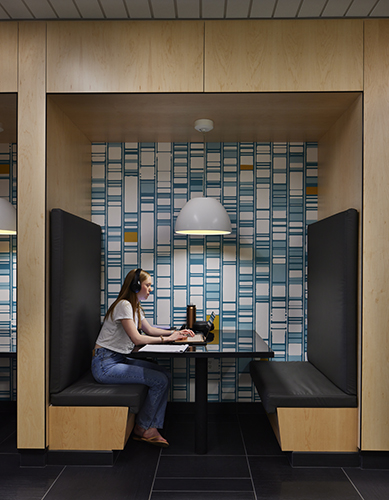
UW-GU Health Partnership Building, Spokane WA – We worked with multiple tenants for branding and carefully balanced both tenants’ branding and vision. We incorporated unique graphical themes from each school while aligning with the overall design concept and color palette of the entire building. Unique to this project, we incorporated local history and engaged with the Tribe to develop thoughtful and intentional wall graphics to celebrate the region.
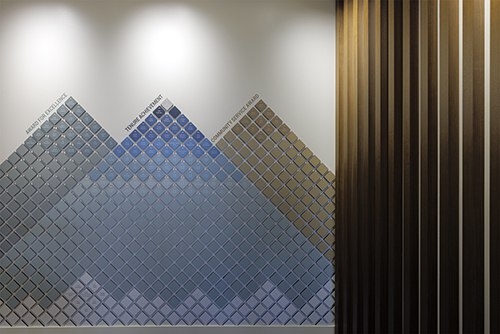
Clark Nuber, Bellevue WA – Our team worked with the client to develop custom graphics and wayfinding throughout their new space, including Pacific Northwest inspired trees in the collaboration space and an employee recognition wall. The selected colors and materials were all aligned with the company brand identified during Discovery & Analysis and our Culture Discovery Process.
The Teel, Seattle WA – CollinsWoerman developed EGD to integrate the deep neighborhood history, using historic photography from the archives, all while ensuring color and branding were aligned with the client’s defined project branding and vision.
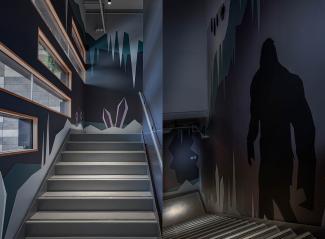
Kirkland Urban, Kirkland WA – Working with a creative tech tenant, CollinsWoerman designed EGD for an intricate stairwell incorporating the buildings “PNW plate-tectonics" design concept along with custom floor to ceiling graphics and unique concreate floor imprints. These unique solutions resulted in a playful yet professional workplace perfect for this tech tenant.
Our team enjoys the creativity and collaboration that comes along with integrating EGD into projects. Through our customized process and extensive experience, we focus on creating memorable environments while supporting our client’s brand identity with the goal of strengthening the connection to space. CollinsWoerman sees environmental graphics as an integral part of how we design places that resonate and are excited to help future clients through the EGD process to help deliver cohesive, immersive experiences.
Learn more about our design team and reach out to discuss incorporating dynamic EGD into your space at info@collinswoerman.com