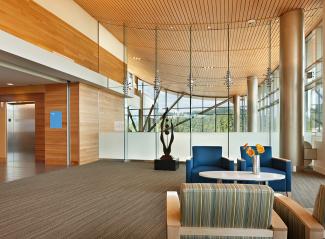
We spoke with interior designer Marcus about the healthcare interior design process — what inspires his work, how spaces balance care and comfort, and where healthcare interiors are headed next.
Q: How do you balance clinical efficiency with warmth and comfort?
A: Designing healthcare environments often involves navigating a careful balance between efficiency, comfort, and long-term performance. While many factors influence this equilibrium, the selection of material finishes is especially critical. Designers aim to introduce the warmth and familiarity of natural materials such as wood and stone; however, true natural products are often impractical in clinical settings due to their susceptibility to damage and the challenges they present for sanitization.
Durability is a primary requirement in healthcare spaces. For example, countertops must withstand heavy use and frequent cleaning. Fortunately, high‑quality synthetic surfaces now offer the aesthetic appeal of natural stone or marble while outperforming them in durability. These materials are non‑porous, easier to maintain, and better suited for environments that demand strict hygiene.
Similarly, wall surfaces require strategic consideration. Walls are highly vulnerable to impacts from rolling equipment, carts, and daily traffic. While wallcoverings can provide visual interest, they offer little protection unless paired with enhanced, performance‑grade enhancements. The materials market has evolved significantly, and many options now combine protection with design — enabling the use of attractive wall graphics or patterns without sacrificing durability.
Understanding what materials to use and where to place them is essential. A well‑planned floor layout will fall short if the surrounding finishes deteriorate quickly due to everyday wear. Poor material performance can undermine operational efficiency and increase long‑term maintenance costs. Ultimately, selecting high‑performance finishes is key to creating healthcare environments that are both welcoming and resilient, ensuring the space performs effectively from day one and continues to support users for years to come.
Q: What trends are shaping healthcare interiors right now?
A: Trauma-informed design (TiD) has emerged as a meaningful and influential approach. Rooted in an understanding of how the built environment can either trigger or ease stress responses, TiD aims to create spaces that feel safe, supportive, and intuitive for every user. In healthcare environments where emotions can run high and stress is often unavoidable, the principles of trauma-informed design can have a profound impact. Thoughtfully applying TiD can reduce staff fatigue, improve patient experiences, and create calmer, more welcoming spaces for visitors. The following are a few example design elements that illustrate this approach:
Acoustics - Noise is a significant stressor in medical settings. High‑performance acoustic ceilings, wall treatments, and strategic space planning can reduce agitation and create a more controlled auditory environment. By prioritizing quieter spaces, designers help ease anxiety and improve overall comfort.
Lighting - Healthcare facilities require bright, functional lighting, but intensity alone is not enough. Trauma-informed strategies include adjustable fixtures, layered lighting, and glare reduction to ensure users can adapt their environment to their comfort. Softer transitions and varied light sources help avoid overly harsh contrasts and support a calmer atmosphere.
Wayfinding - Navigating medical facilities can be overwhelming, especially in moments of stress. Clear, predictable signage and intuitive spatial organization help reduce confusion and build a sense of control. Simple formatting and highly legible graphics allow users to find their way with confidence rather than frustration.
Ultimately, trauma-informed design encourages professionals to step into the user’s experience and ask a simple but vital question: How does this environment shape the way someone feels? By prioritizing emotional impact alongside aesthetics and function, TiD guides the creation of spaces that promote dignity, autonomy, and well‑being.
Q: How has telehealth influenced physical space planning?
A: When telehealth services first emerged, many design teams anticipated the need for larger exam rooms equipped with specialized technology, adding significant complexity to clinical layouts. However, the evolution of telehealth has demonstrated that most service needs can be met with existing technologies. Software platforms and built‑in facility systems now support the majority of telehealth functions, greatly reducing the need for dedicated specialty spaces.
As a result, many healthcare providers can conduct telehealth appointments directly from their offices or shared staff areas, often using only a standard workstation equipped with a camera. Despite the simplicity of the equipment, patient privacy and HIPAA compliance remain essential design considerations. To maintain confidentiality, facilities often incorporate private rooms or enclosed zones that staff can use for virtual visits. Some organizations choose to establish dedicated telehealth offices, which help create a clear operational boundary for staff and allow for efficient use of shared resources. Overall, the adoption of telehealth has not significantly affected programmatic square‑footage requirements. Instead, its integration into healthcare environments has been relatively seamless, requiring only thoughtful planning rather than major spatial expansion.
Marcus specializes in healthcare design, bringing 15 years of experience across medical and adjacent markets. His work is grounded in a commitment to human wellness, balancing the needs of patients, staff, and caregivers to create environments that are both highly functional and thoughtfully designed.
This Q&A is part of our CollinsWoerman Expert Series where we interview the firm’s architects, designers, sustainability experts, and interior designers to get their perspectives on industry trends, best design practices, and more.